UBER
Simplifying how teams connect at Uber by removing friction from community creation.
Redesigning Uber’s internal communities platform to eliminate engineering dependency and enable instant group creation.
Company
The research revealed three major problems.
Product
Whober
My Role
Senior Product Designer
Date
2023
Context
Uber operates at a global scale, with thousands of employees distributed across teams, offices, and time zones.
Despite the existence of multiple internal communities, employees struggled to discover relevant groups, understand their purpose, and create new ones without relying on engineering support.
Previously, creating a group required submitting a request form to engineering, with turnaround times of up to 2 weeks. Although the setup itself took only 15–20 minutes, the process introduced operational overhead, context switching, and delays in team collaboration, costing an estimated $60–$90 per request and scaling to over $150K annually in engineering time for a non-core task, turning a simple workflow into a recurring organizational bottleneck.
I led the redesign of Uber’s internal communities platform, shifting group creation from an engineering-driven workflow to a self-service experience, enabling users to create groups in under 1 minute while eliminating engineering dependency entirely.
Problem
Despite the availability of internal communities, the experience was fragmented and difficult to scale.
Employees struggled to discover relevant groups, understand their purpose, and differentiate between community types. As a result, many relied on informal channels or recreated existing groups, leading to duplicated efforts and siloed knowledge.
At the same time, group creation was tightly coupled with engineering. Every new request required manual handling, introducing delays, context switching, and operational overhead for a non-core task.
This created three critical challenges:
Low discoverability
Employees couldn’t easily find or evaluate existing communitiesLack of clarity
Different group types were poorly defined and inconsistently usedOperational dependency
Creating a group required engineering support, limiting scalability
Together, these issues reduced collaboration efficiency, slowed down knowledge sharing, and prevented the ecosystem from scaling organically across the organization.
Research
To better understand the problem space, I led the end-to-end discovery process, combining qualitative and quantitative methods, including user interviews, surveys, and usability testing.
Initially, I assumed that the main issue was related to navigation and information architecture. However, research revealed a deeper problem: users lacked clarity around the purpose and differences between community types, which led to hesitation in both joining and creating groups.
I also identified that many employees avoided creating new groups altogether due to the dependency on engineering and the 2-week turnaround time. Instead, they relied on informal channels or recreated existing groups, increasing fragmentation across teams.
Key Insights
Clarity drives
adoption
Users needed clear distinctions between group types to confidently engage
Poor community discoverability
Even small operational barriers significantly reduced group creation
Discoverability impacts collaboration
Inability to find relevant groups led to duplicated efforts and siloed knowledge
These insights shifted the focus from a navigation problem to a broader systemic challenge, leading me to redefine the experience around clarity, autonomy, and scalability.
Strategy
Based on the research insights, I defined a strategy focused on transforming the experience from an engineering-dependent workflow into a scalable, self-service ecosystem.
To guide the solution, I established three core principles:
Clarity over complexity
Clearly define and differentiate group types to reduce confusion and increase confidence in user actions
Self-service by default
Remove engineering dependency and empower users to create and manage groups independently
Scalable structure
Design a system that supports organic growth without increasing operational overhead
Instead of focusing only on improving navigation, the strategy shifted towards redefining how communities are structured, created, and discovered across the organization.
This approach ensured that the solution would not only solve immediate usability issues but also address long-term scalability and operational efficiency.
Design Strategy
To address the identified challenges, I designed a self-service experience that enables employees to independently discover, create, and manage communities.
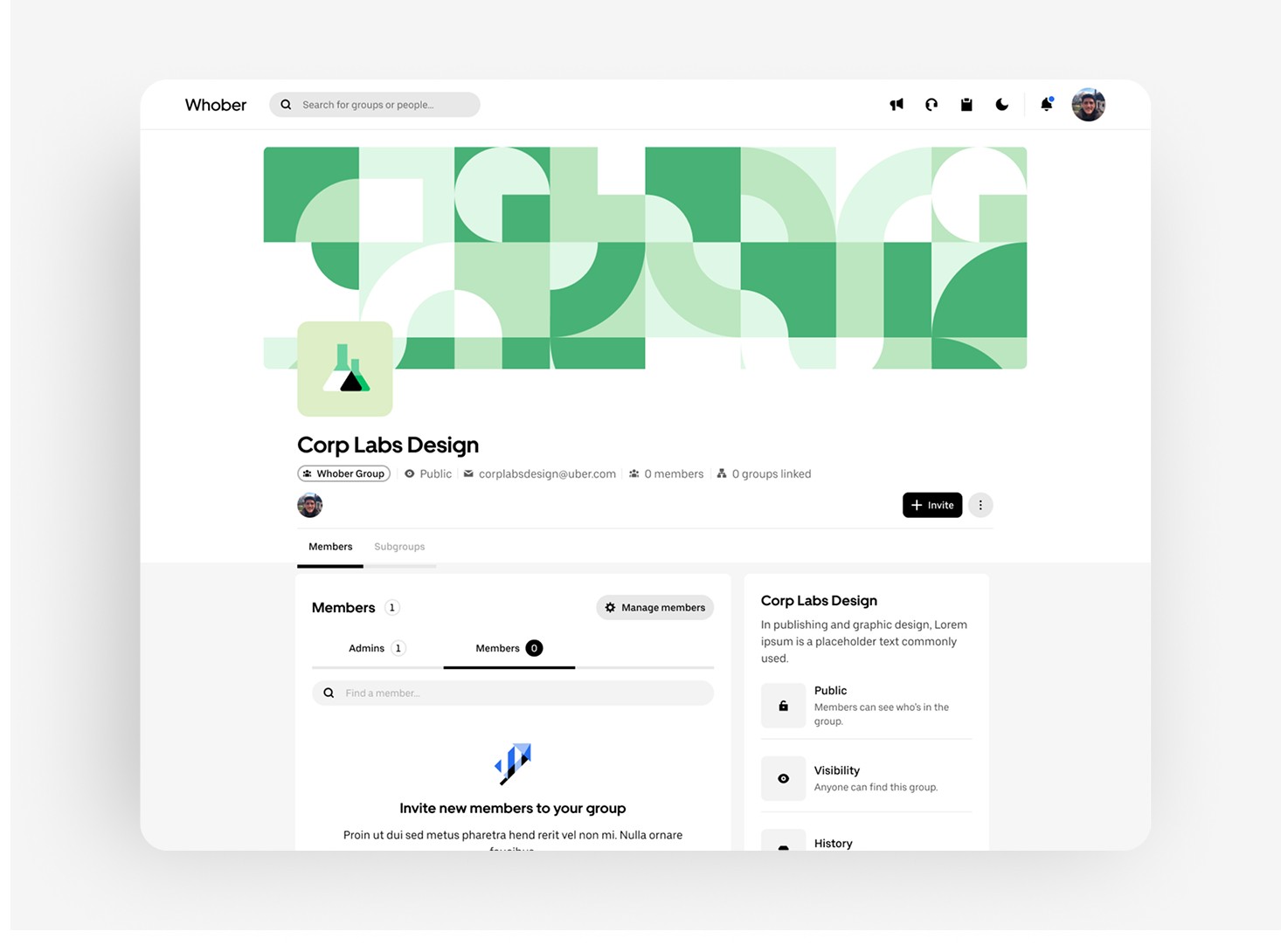
I redesigned the group creation flow to be fully self-service, allowing users to create a group in under 1 minute without any engineering involvement.
Simplified Group Creation
I redesigned the group creation flow to be fully self-service, allowing users to create a group in under 1 minute without any engineering involvement.
The flow was structured to reduce friction and cognitive load, guiding users through a clear and lightweight process with only essential inputs.
-> This eliminated operational dependency and significantly increased the rate of group creation.
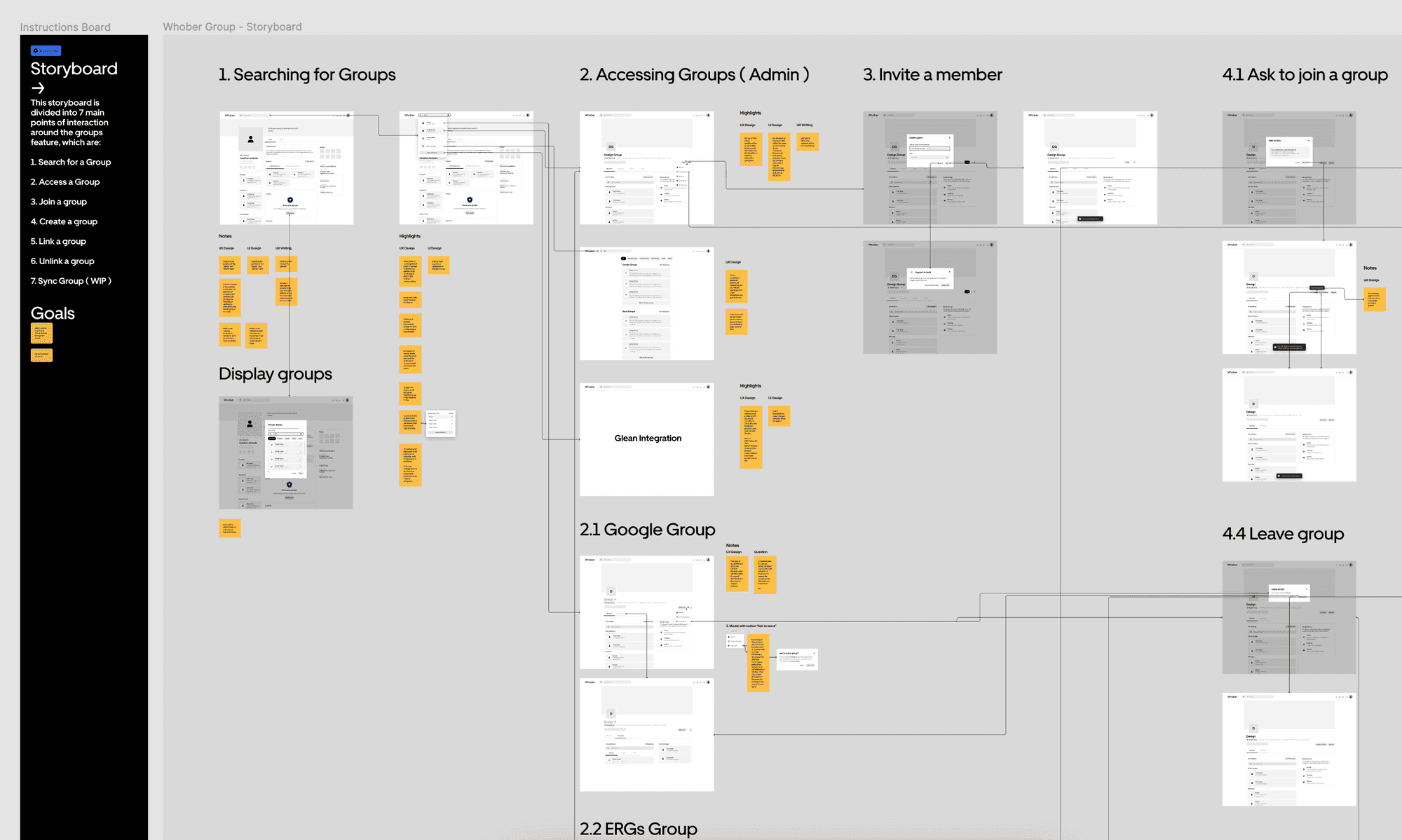
User Journey & Story Mapping
To better understand how employees interacted with communities, I mapped the end-to-end journey of how users discover, evaluate, join, and create groups on the platform.
This exercise helped the team visualize the full experience and identify where the biggest friction points occurred.
Early Exploration & Sketches
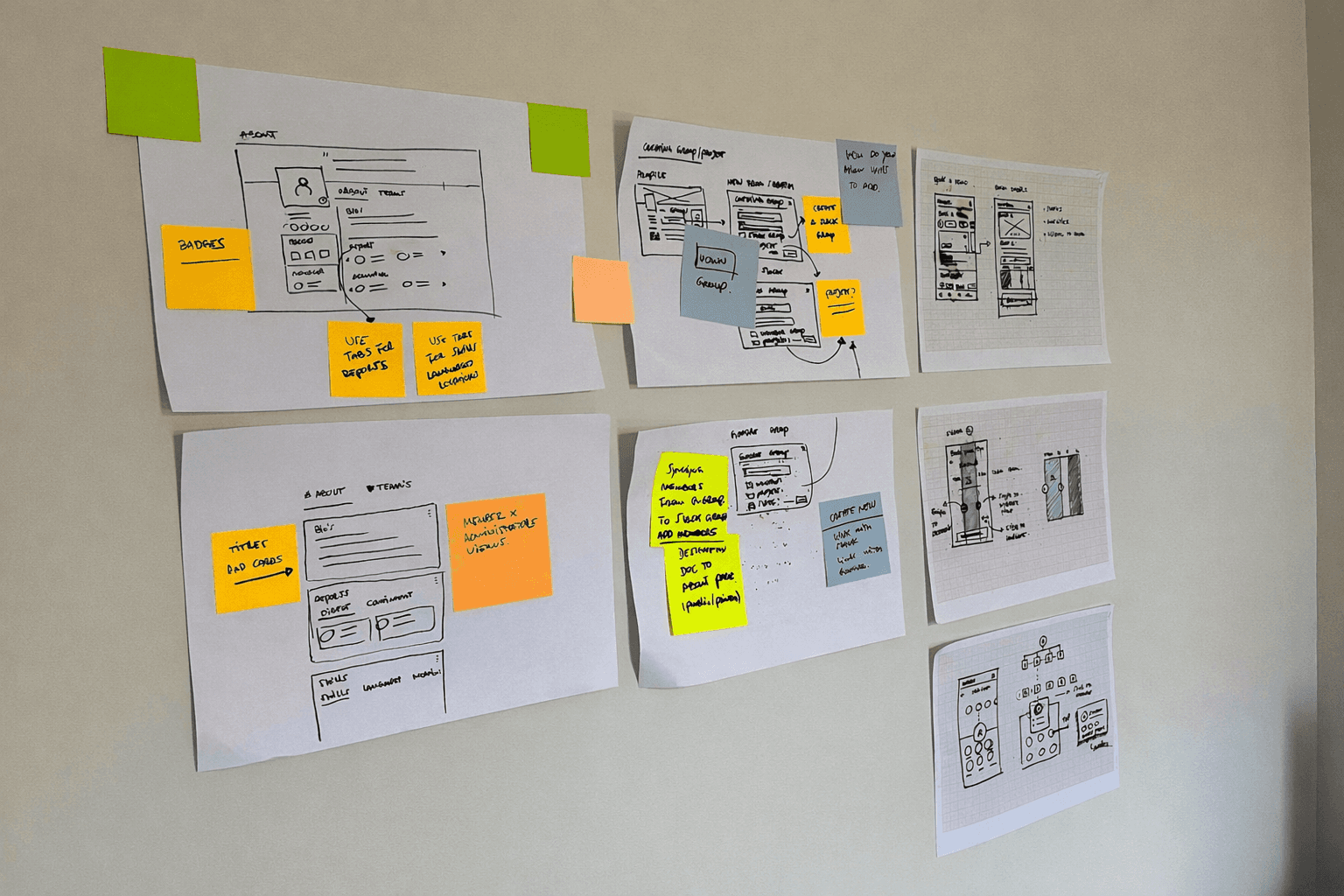
With the key problems identified and the design principles defined, I began exploring different ways to simplify the community experience.
The goal during this phase was to quickly test ideas for improving community discovery, group structure, and the creation flow.
I started with low-fidelity sketches to rapidly iterate on multiple concepts before moving to higher-fidelity prototypes.
Prototyping
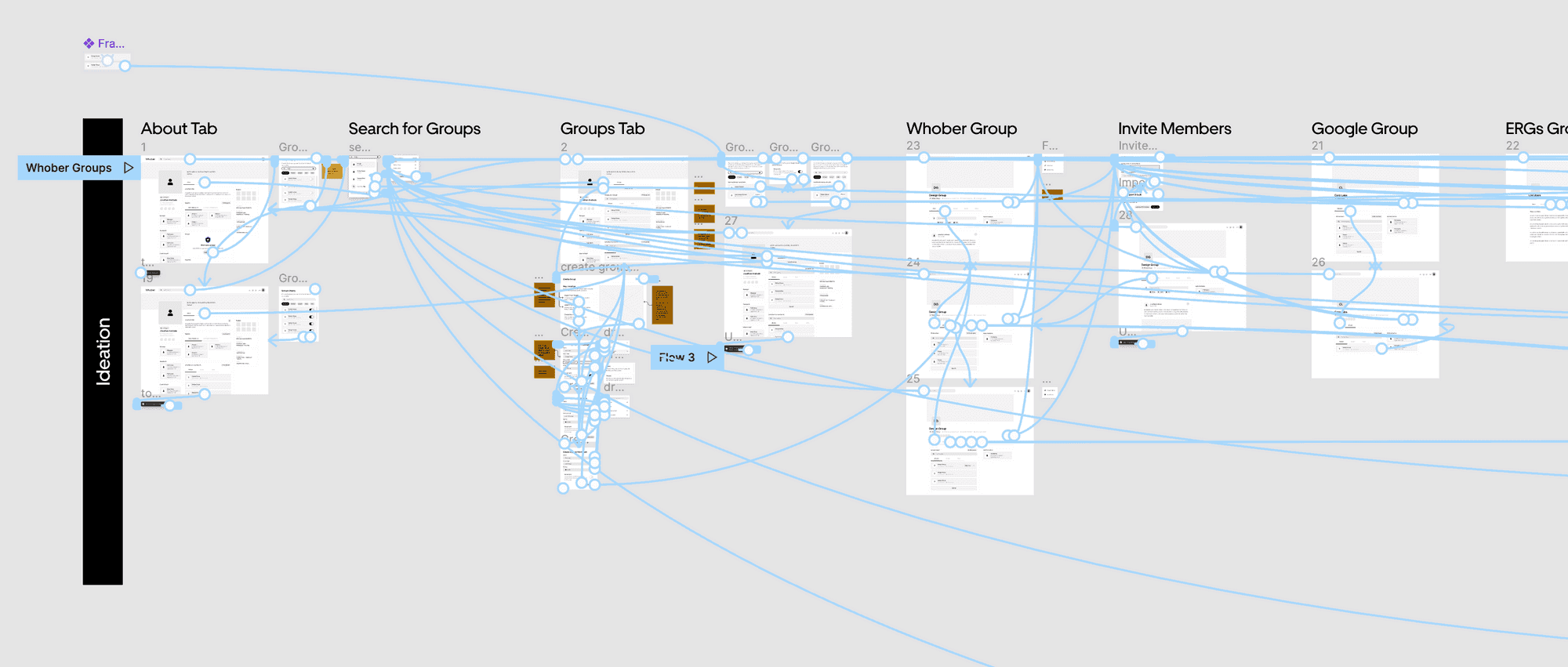
Based on the early explorations, I developed interactive prototypes to validate new approaches for community discovery and group creation.
The prototypes focused on two critical areas of the experience:
• Discovering and browsing communities
• Creating new groups through a simplified flow
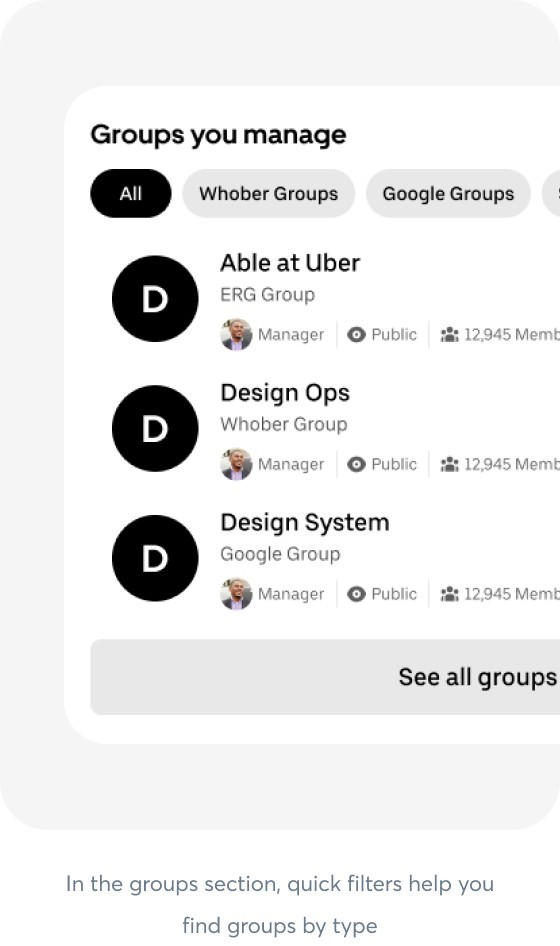
Improved community discovery
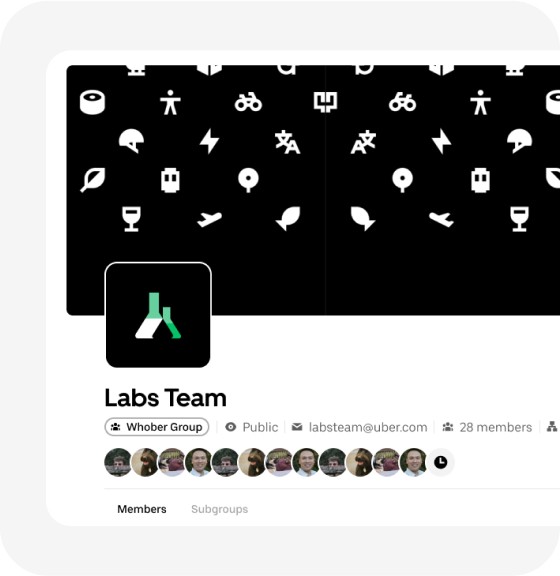
The new exploration introduced clearer navigation and a more structured way to browse communities.
Key improvements included:
• Clearer group categories
• Improved visual hierarchy
• Easier navigation between communities
These changes helped users quickly understand what communities existed and where to find relevant discussions.
Simplified group creation flow
A new step-by-step creation flow was designed to make it easier for employees to start a community.
The new flow focused on:
• Reducing the number of steps required
• Clarifying group types and requirements
• Allowing users to create communities independently
This approach significantly reduced the friction that previously required manual processes and engineering involvement.
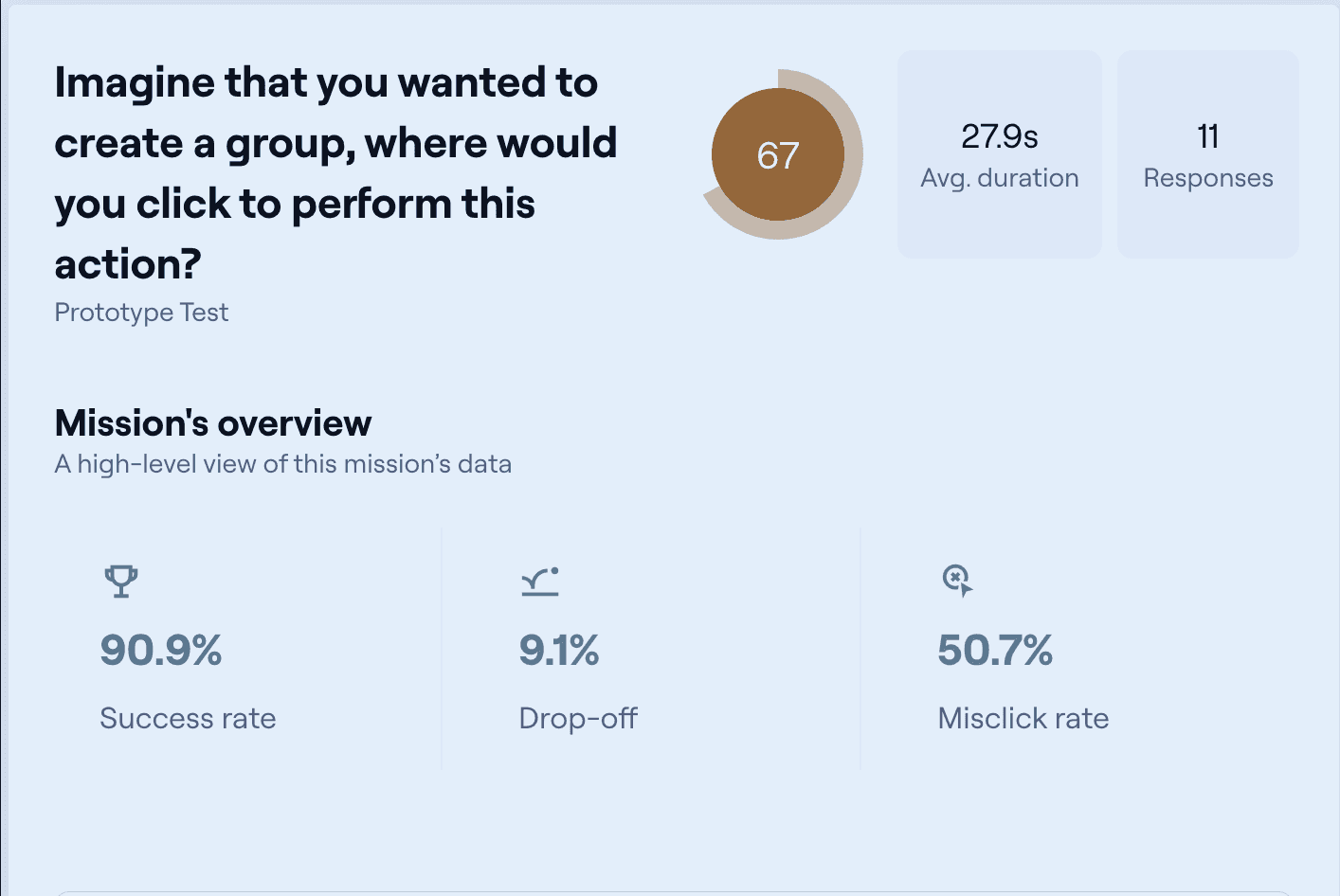
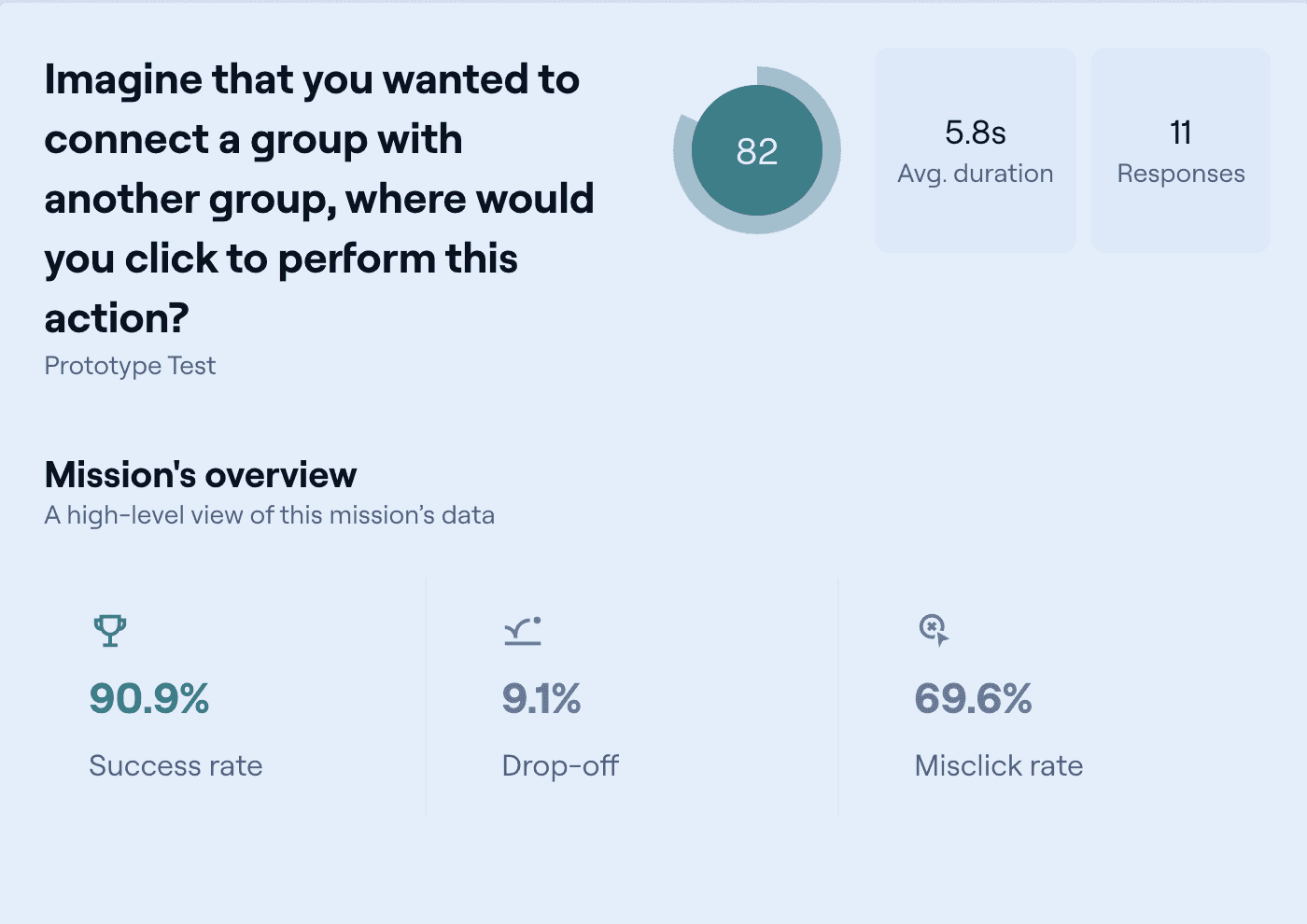
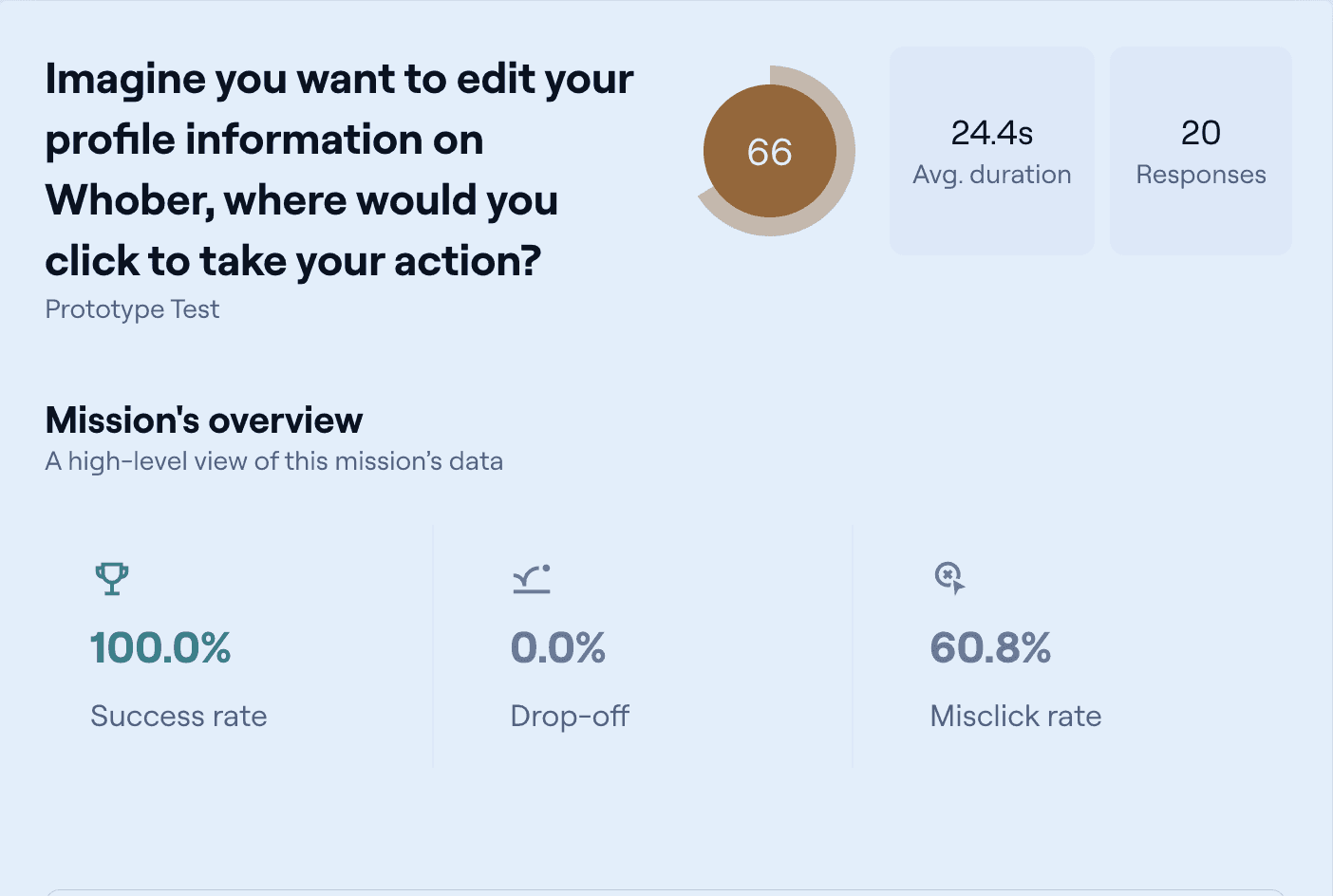
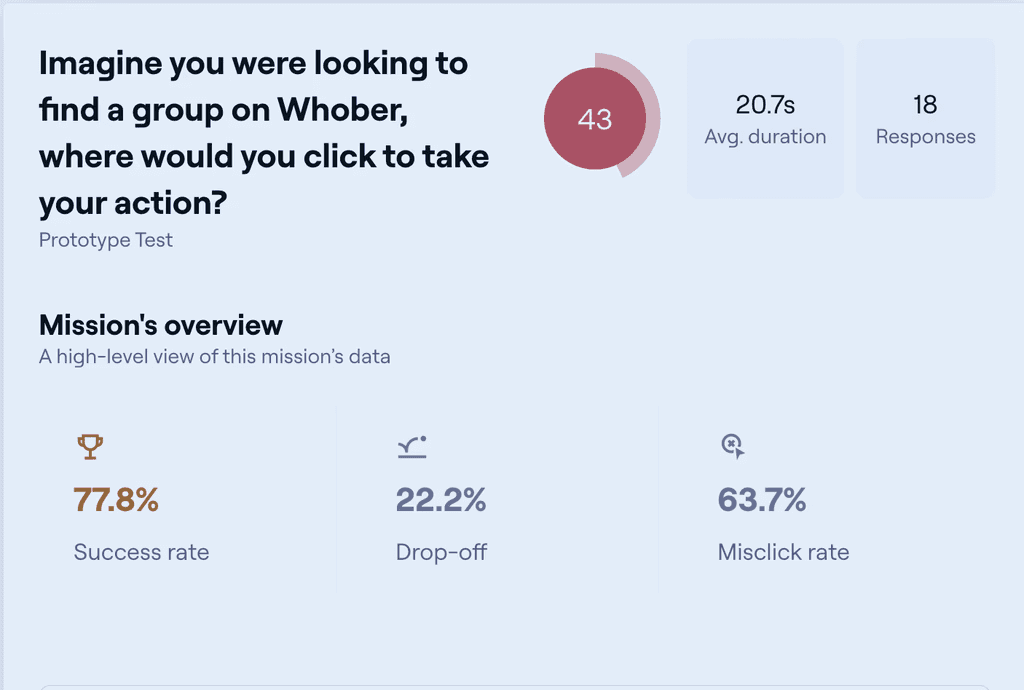
Usability Testing
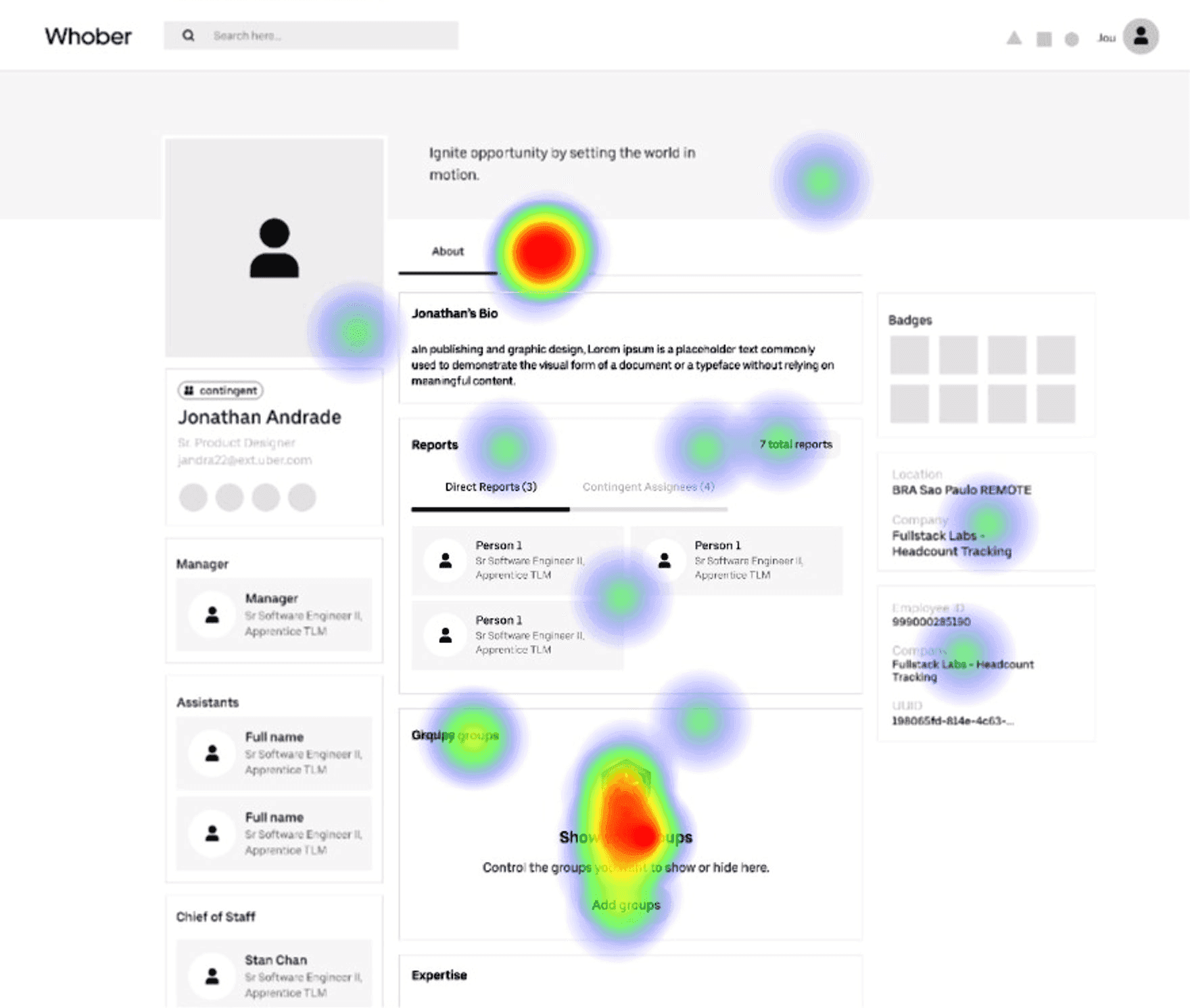
To validate the proposed solution, I conducted usability tests with employees who had previously interacted with the platform.
The goal was to evaluate whether the redesigned experience improved community discovery, clarity of group structures, and the group creation process.
Participants were asked to complete common tasks such as:
• Finding relevant communities
• Joining a group
• Creating a new community
Final Solution
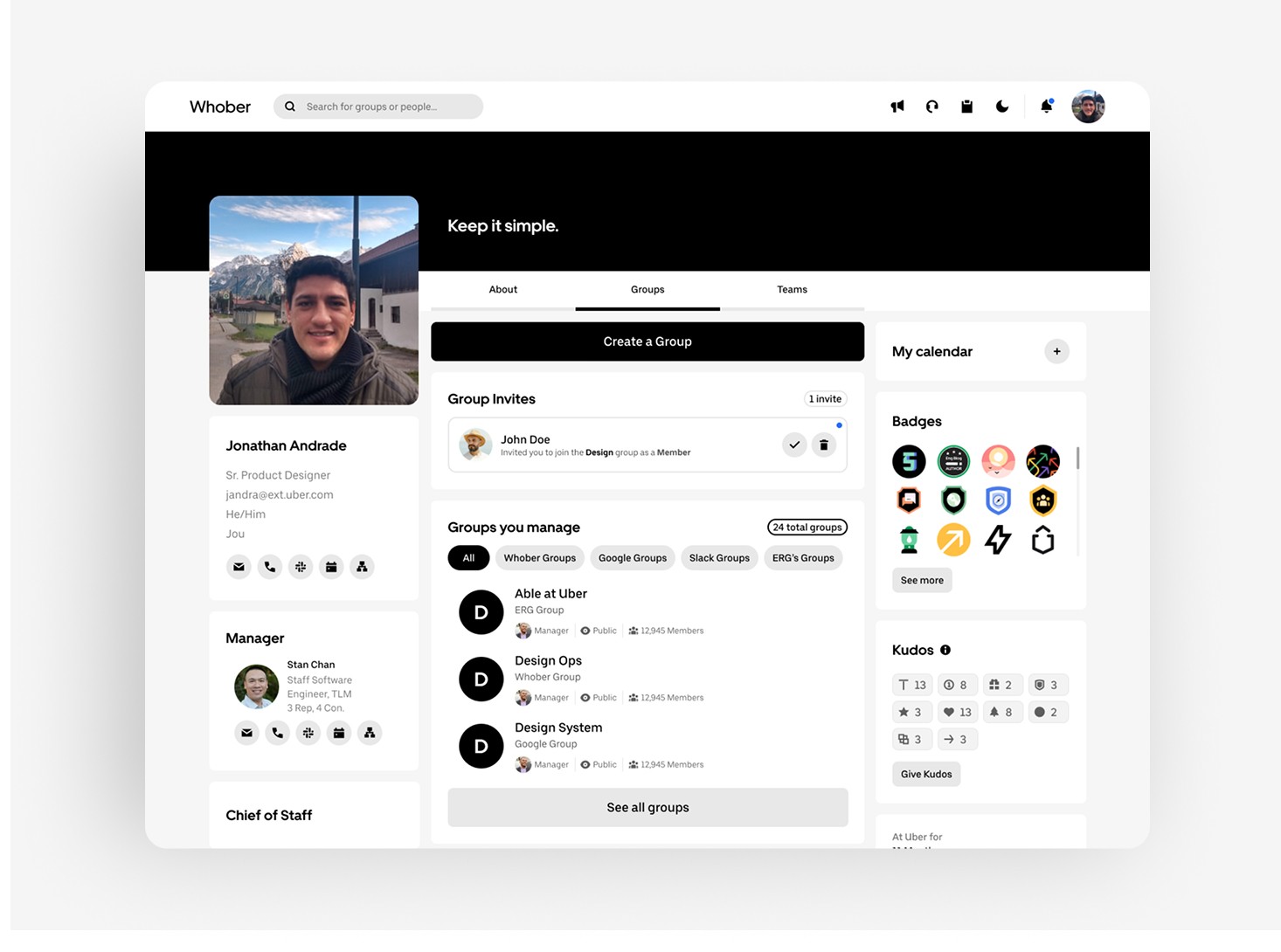
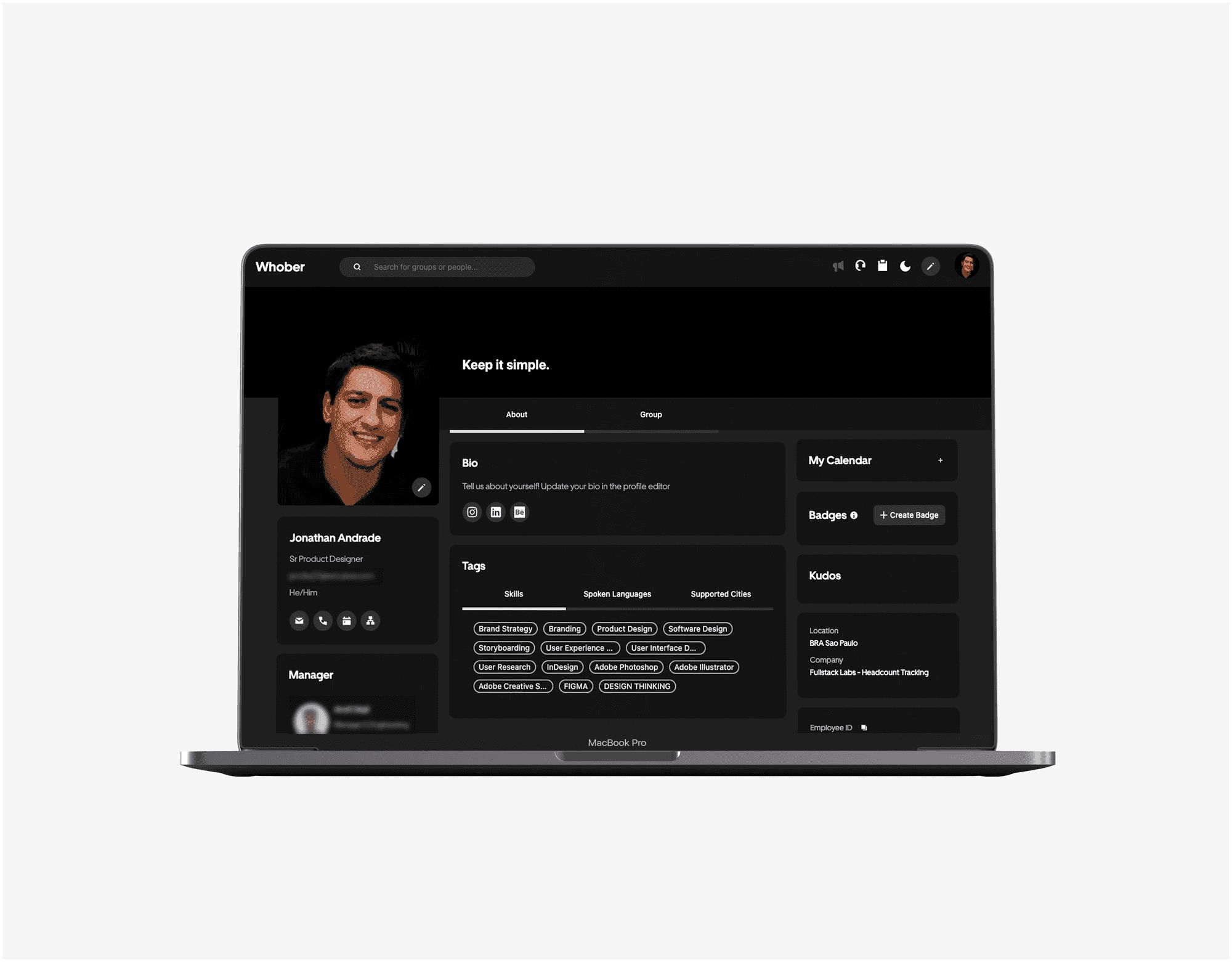
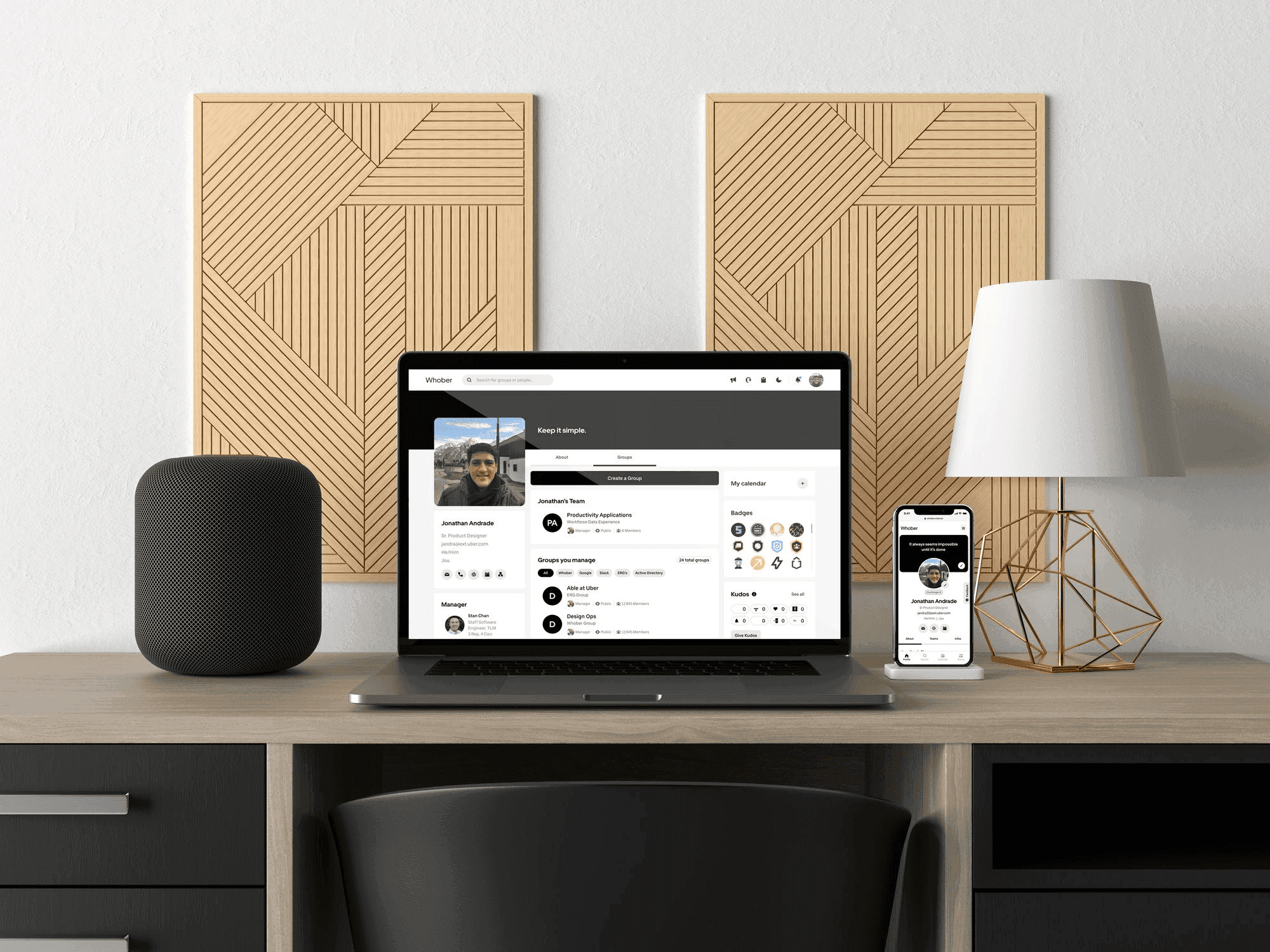
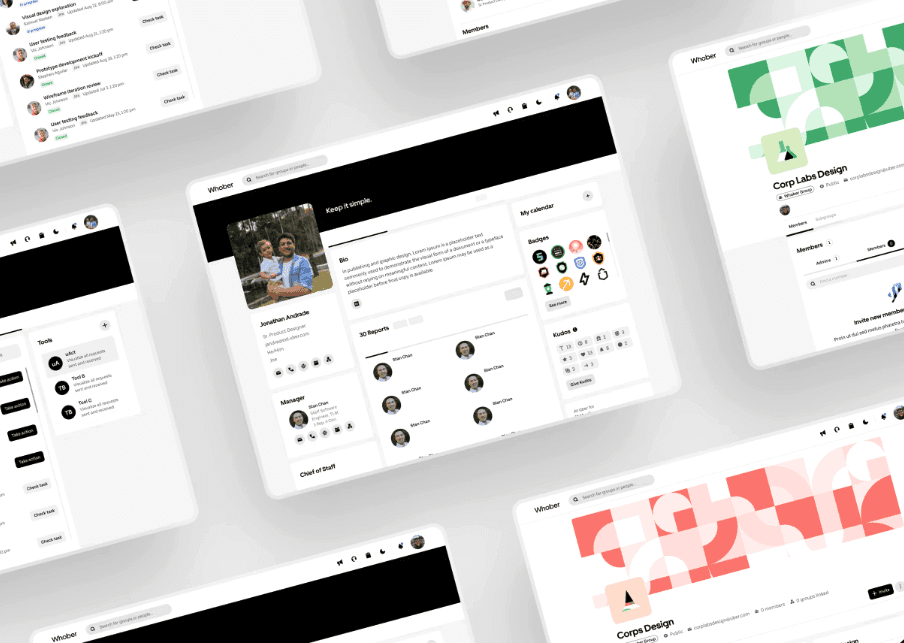
The final design introduced a clearer and more intuitive experience for discovering, joining, and creating communities within Whober.
The redesign focused on reducing friction, improving clarity, and enabling employees to participate more actively in internal communities.
Empowering users through self-service
Reducing dependency on technical teams enables faster adoption and encourages employees to take initiative when creating new communities.
Clarity drives engagement
When structures and categories are easy to understand, users feel more confident navigating the platform and participating in discussions.
Internal tools deserve great UX
Even though Whober is an internal product, improving the experience had a meaningful impact on collaboration, knowledge sharing, and team connection across the company.